
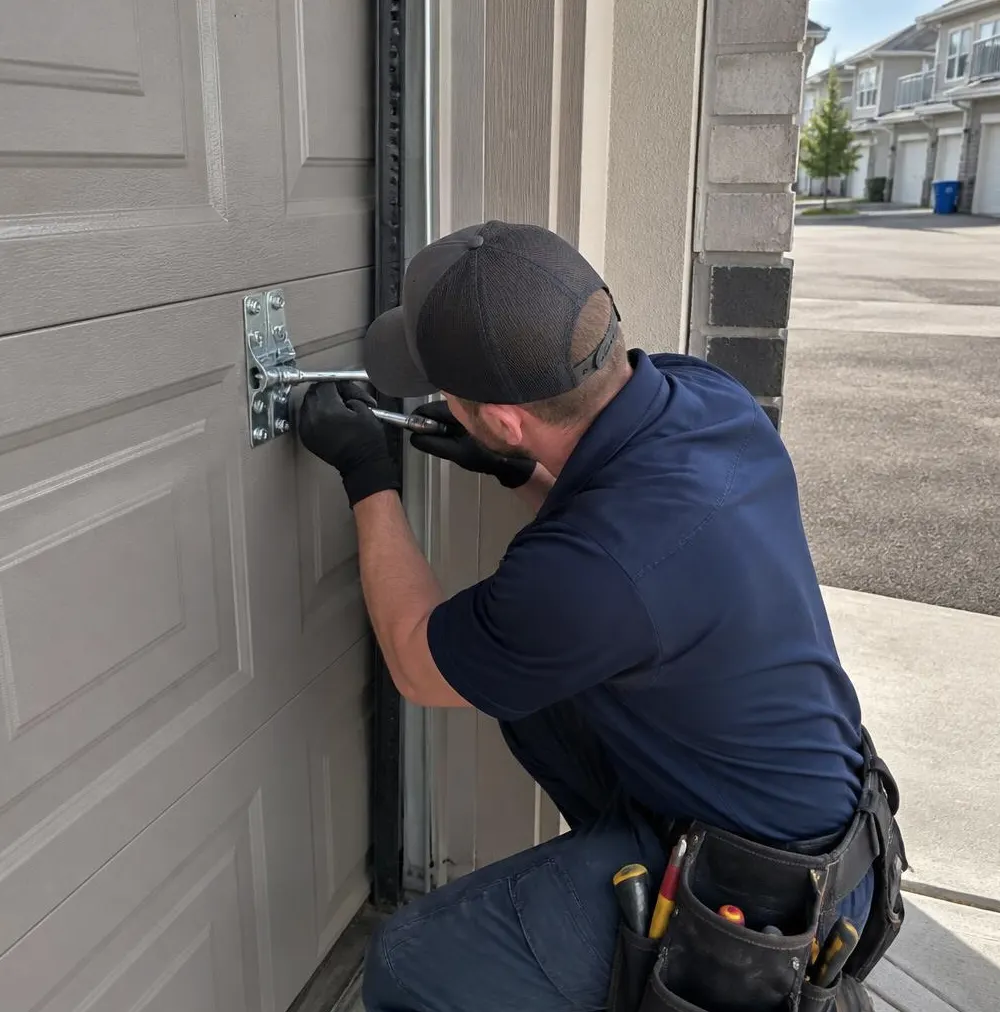
What a Technician Usually Finds
Most calls about panel damage start the same way: a homeowner backed a car into the door, a lawnmower kicked up a rock, or storm debris from an afternoon downpour put a dent or crack in one section. Sometimes it's not an impact at all — it's a bottom panel that's started to bubble with rust or warp slightly from months of humidity swings. By the time a technician gets there, the question is almost always the same: can we just replace that one panel, or does the whole door need to come down?
The honest answer depends on the door's age, how it was built, and what shape the rest of it is in. Here's how the two options actually compare.
Replacing a Single Panel
What It Involves
A technician orders a matching panel from the door's manufacturer (or a close match if the original line is discontinued), removes the damaged section, and installs the replacement without touching the rest of the door, the opener, or the track system.
- Lower cost — you're paying for one section, not the full assembly.
- Faster turnaround — often a single visit once the panel is in hand.
- No disruption to the opener or track alignment — if those are working fine, there's no reason to redo them.
Where It Falls Short
- Color and texture mismatch. Sun fading is real here, and a brand-new panel next to five-year-old weathered ones can look noticeably different, even with the same paint code.
- Panel availability. Older doors, especially discontinued models, may not have a matching panel in stock, which can mean delays or an imperfect substitute.
- It doesn't fix underlying problems. If the panel cracked because the whole door is undersized for wind load, or rusted because the door's finish has broken down everywhere, a new panel is a patch, not a solution.
Replacing the Whole Door
What It Involves
The entire door — panels, track, and often the opener if it's being upgraded at the same time — is removed and replaced with a new unit sized and rated for the home.
- Uniform appearance. Every panel matches, which matters more than people expect once it's installed.
- Current wind-load rating. Hurricane season here means wind-load requirements aren't optional on newer installations. A full replacement lets you bring an older, non-rated door up to current standards instead of pairing a new panel with a door that was never built for today's storm codes.
- Consistent insulation and weatherstripping. Moisture and swelling are an ongoing issue in this climate, and a new door means new seals and consistent insulation value across every section — not just the one panel that got replaced.
- Higher upfront cost. A full door replacement typically runs several times the cost of a single panel swap, so it's a bigger decision financially.
Where It Falls Short
- It's more money and more labor time, even when the rest of the door was perfectly functional.
- If the opener and track are in good shape, replacing the whole door means spending on components that didn't need it.
The Trade-Offs, Side by Side
Boil it down to three questions and the right call usually becomes clear:
- How old is the door? Under roughly seven or eight years, panels are more likely to still be available and color-matchable. Past that, finding an exact match gets harder, and the rest of the door is closer to needing attention anyway.
- Is the damage isolated, or is it a symptom? One dent from a backed-into bumper is isolated. Rust bubbling on more than one panel, or warping across several sections from years of humidity exposure, points to a door that's failing as a whole, not in one spot.
- Does the current door meet wind-load expectations for this area? If it's an older door that predates current wind-load standards, a storm season is a reasonable prompt to upgrade the whole unit rather than patch a single panel on a door that wasn't built for today's requirements.
What Makes Sense for Typical Homes Here
For a lot of homes in Sumterville, Bushnell, Wildwood, and the surrounding area, the door is five to fifteen years old and has handled a fair number of humid summers and storm seasons. If the damage is a single dent or crack from an isolated event and the rest of the door looks solid, a panel replacement is the practical, budget-friendly fix. But if there's rust showing up in more than one spot, the door predates current wind-load expectations, or the panels are already faded and mismatched from sun exposure, putting money into a single panel is often just delaying the inevitable. In that case, a full replacement is the better long-term investment, especially heading into another storm season.
When to Call Sumterville Garage Door Experts
If you're not sure which camp your door falls into, that's exactly the kind of call worth making before buying parts. Our technicians can inspect the panel damage, check the rest of the door for rust, warping, or wind-load issues, and give a straight answer on whether a panel swap will hold up or whether a full Garage Door Installation & Replacement makes more sense. If the opener or track is also showing wear during that visit, we'll flag it as part of a Garage Door Maintenance & Tune-Up rather than letting it turn into a second service call later.
If you've got a damaged panel and aren't sure what it needs, call Sumterville Garage Door Experts for an honest look and a straight recommendation — serving Sumterville, Bushnell, Webster, Wildwood, Coleman, Center Hill, Lake Panasoffkee, and The Villages.